<img height="1" width="1" style="display:none" src="https://www.facebook.com/tr?id=786897638174755&amp;ev=PageView&amp;noscript=1">

As a business grows, Inventory becomes harder to trust. Data lives in QuickBooks, spreadsheets, and disconnected tools. Item records drift. Warehouse visibility narrows. Teams spend time reconciling numbers just to confirm what is actually in stock.

What once worked now slows decisions and adds risk.

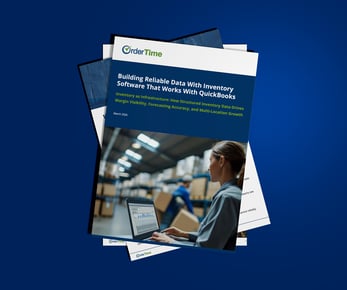
Order Time’s Inventory Control and Order Management platform changes that. It extends QuickBooks with the operational control it was never built to handle. With Order Time, Inventory, purchasing, receiving, and warehouse activity are managed in one connected system.

26-03_OT_white-paper

Data Infrastructure: A Strategic Shift with Inventory Software That Works With QuickBooks

Inventory touches everything. Purchasing, fulfillment, cash flow, reporting. When the data behind it is scattered or loosely managed, teams end up reacting instead of planning.

Treating Inventory as infrastructure means putting real structure around it and keeping operations aligned with QuickBooks. When that alignment is in place, Inventory supports growth instead of slowing it down.

This guide breaks down what that shift actually requires and how to put it into practice.


What’s Inside:
  • Why Inventory data starts to break down as SKUs, locations, and order volume increase
  • How to design item and warehouse structure that supports clean reporting
  • The role of governance in protecting Inventory accuracy over time
  • Where spreadsheet workarounds create risk and slow decisions
  • How Order Time supports stronger Inventory practices alongside QuickBooks

Download now

Frequently Asked Questions

What does it mean to treat Inventory as infrastructure?
It means managing Inventory as a core operational system, not just a list inside a spreadsheet or QuickBooks alone. Inventory connects purchasing, warehousing, sales, and financial reporting, so it must be structured and governed accordingly.
Why does basic QuickBooks Inventory tracking break down as businesses scale?
As SKU counts, warehouse locations, and order volume increase, QuickBooks alone cannot manage the operational detail required. Teams rely on spreadsheets and manual adjustments, which makes Inventory harder to trust and harder to control.
Why do growing businesses need Inventory software that works with QuickBooks?
They need operational depth without replacing their current system. Inventory software that works with QuickBooks adds warehouse visibility, workflow alignment, and real-time control.