<img height="1" width="1" style="display:none" src="https://www.facebook.com/tr?id=786897638174755&amp;ev=PageView&amp;noscript=1">

As manufacturers, wholesalers, and e-commerce companies scale, inventory valuation gets harder to keep accurate. Valuation results can drift when purchasing, receiving, and fulfillment move faster than the data behind them. This gets worse without the right valuation method in place and the right software tools to support it.

This is where QuickBooks alone reaches its limits. While it supports accounting and reporting, it does not capture the operational inventory and order detail needed as complexity increases, and it does not fully support LIFO and Weighted Average Cost valuation workflows.

In this guide, we explain how Order Time strengthens inventory valuation beyond QuickBooks alone, why FIFO is the best choice at scale, and what growing businesses can do to make FIFO valuation reliable long term.

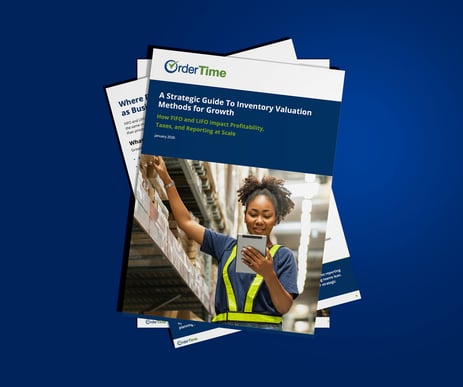
26-01_OT_white-paper

Essential Guide to Inventory Valuation Methods for Growing Businesses

Inventory valuation problems rarely start in accounting. They start in operations, when purchasing, receiving, fulfillment, and adjustments stop lining up cleanly. This guide helps growing businesses identify where valuation accuracy breaks down and which valuation method holds up at scale. 

What’s Inside

  • A clear breakdown of FIFO, LIFO, and Weighted Average Cost, and what each method depends on operationally
  • Where valuation reliability breaks down at scale, and how Order Time supports sustainable FIFO valuation through stronger inventory and order tracking
  • Why the FIFO valuation method is a better option for growing businesses

If inventory valuation has become harder to reconcile, harder to explain, or harder to trust, this guide outlines what causes the breakdown and how to build a more reliable FIFO foundation.

Download now

Frequently Asked Questions

What is an inventory valuation method?
An inventory valuation method determines how inventory costs are assigned to cost of goods sold and remaining inventory. Common methods include FIFO, LIFO, and Weighted Average Cost.
Why do inventory valuation methods become harder to manage as businesses grow?
Growth increases inventory movement, order volume, and the number of places where data can fall out of sequence. When inventory activity is not tracked consistently, valuation accuracy declines regardless of the method used.
Why is FIFO the best valuation method?
FIFO is usually the best valuation method for growing manufacturers, wholesalers, and e-commerce companies because it is easier to maintain consistently, easier to explain in reporting, and keeps inventory value closer to current costs as operations scale.